A Tough Decision: A New Car and 14 year Ditch of Waste
There is a special kind of procrastination reserved for moving house. It disguises itself as productivity. You’re not avoiding the packing, you’re researching. You’re reading a book about the art of tidying instead of actually tidying. My wife has noticed. My wife is not impressed.
We are leaving Tokyo for Etajima, in Hiroshima Prefecture, a journey of 836 kilometres and a considerable change of pace. We plan to buy an akiya, and if the gods of rural real estate smile on us, a kominka. The inaka is calling. Unfortunately, so is fourteen years’ worth of accumulated stuff.
Decluttering 14 Years of Gomi with KonMari
Let’s be honest: most of it is crap. Over fourteen years together, we collected so much that at one point we had to move to a bigger apartment just to hold the excess. That is not a lifestyle choice. That is a warning sign.
Now it all has to shrink to something reasonable enough to carry across half of Japan. So I’ve turned to Marie Kondo, who has become my emotional support system and, conveniently, my best excuse. Reading about KonMari counts as working on the move, right? (My wife says no.)
The idea is to hold each item, decide whether it sparks joy, and if it doesn’t, thank it and let it go. Wishing a broken toaster well feels silly until you try it. Between the keep pile, the go pile and the much larger “but it might be useful someday” pile, progress has been slow and a bit dull. But it’s progress.
The big stuff was the easy part. The bed, sofa, fridge and washing machine are staying behind, which takes a huge chunk out of what we need to transport. Everything else is a negotiation.
Buying a Kei Van in Tokyo for Life in Etajima
Once we land in Etajima, we need wheels. I’ve mentioned the roads before: they are very, very narrow. A kei car is the obvious answer, and since we’ll be hauling things to and from the DIY centre while we do up a house, a kei van is practically essential.
There’s a second worry. Etajima is surrounded by sea air, and salt is brutal on a car body. I’d rather not watch a van rust before we’ve got our money’s worth. So the plan is to buy a decent second-hand kei van here in Tokyo and bring it with us.
Facebook Marketplace had plenty of vans starting around ¥100,000, some with shaken, some without. But driving around Ibaraki, Chiba and Kanagawa to inspect them would eat days. Time is money, so I went to a local dealer instead.
Where I come from in the UK, the car dealer is the second most distrusted person in the world, right behind the insurance salesman. I approached this with my guard fully up.
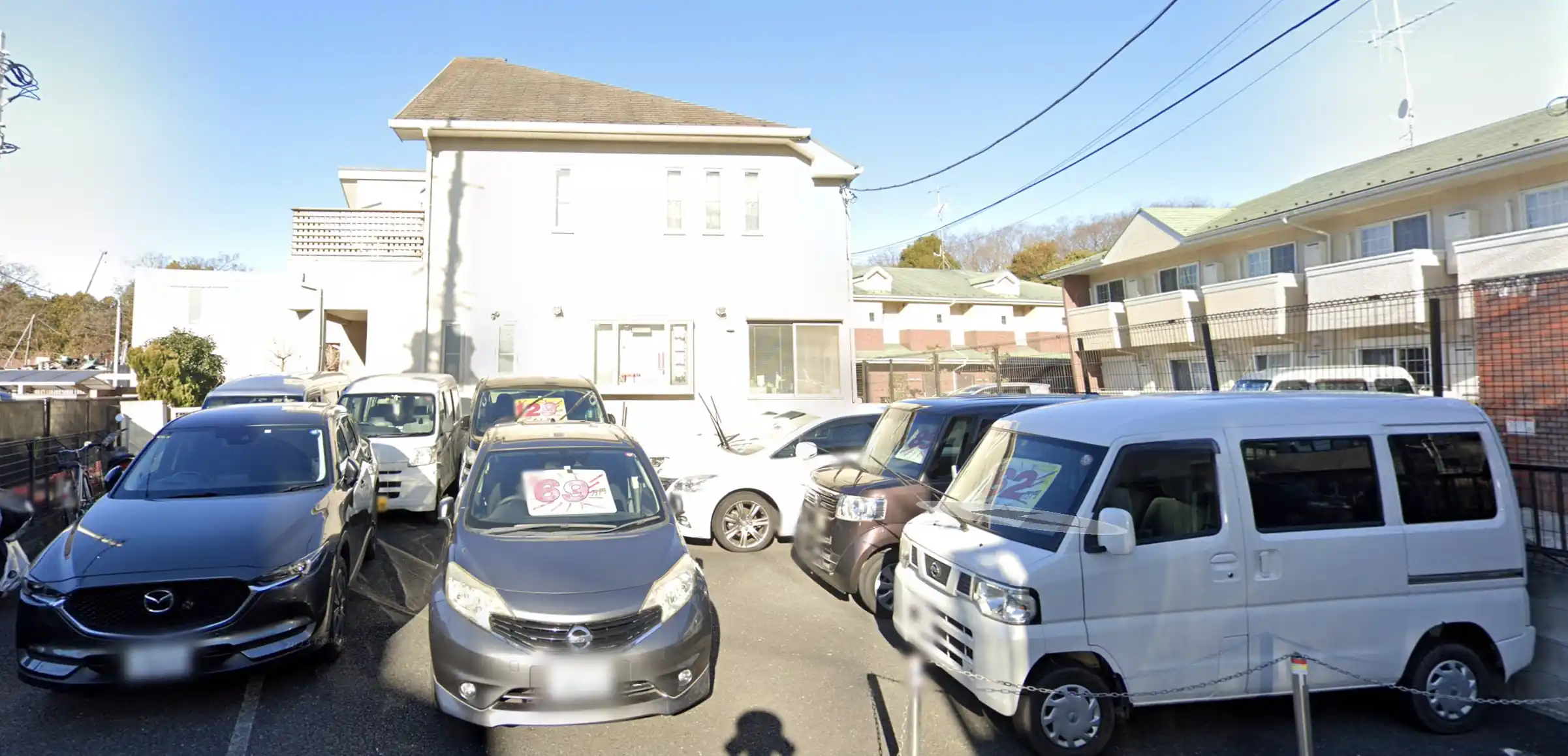
I asked Chappy to point me to dealers in my area, and he recommended a company in Honancho, noting that the owner speaks fluent English. That sealed it. I hopped on my bike, found the office, and knocked on the door. The owner popped his head out to find a non-Japanese guy asking to buy a car. I think he realised pretty quickly that I was serious, and we ended up having a long chat about all sorts of things.
My gut instinct rarely lets me down, and this guy felt like the rare honest dealer. To be fair, he’s the only Japanese car dealer I’ve spoken to, so I can’t speak for the rest. I’ve asked him to find me a kei van with a turbo. Photos to follow.
Tokyo to Hiroshima: Moving Company or Rental Truck?
The next puzzle is moving our belongings: drive a rental van myself, or hire a Japanese moving company?
Driving means roughly 800 kilometres to Hiroshima, one way, leaving the van there at the end. I am not looking forward to that drive, and a professional mover is starting to look like the smarter choice.
Either way, vehicle size depends on volume. If I can get everything down to about 8 cubic metres, it might fit in a 2-tonne short truck. Any more and we’re into a 2-tonne long. Right now I have no idea which side of that line we fall on, so I’ve become a surveyor of my own living room, photographing items, noting dimensions and counting boxes.
There’s a twist. The road up to our future house is too narrow and frankly too dangerous for a big truck. The truck gets us to the island, and the kei van, which might carry only one or two cubic metres at a time, ferries everything up the mountain, load by load.
Your Advice on Moving to the Japanese Countryside
I’d love to hear from anyone who has done a move like this. A few things I’m still chewing on:
- Movers or DIY? If you’ve hired a Japanese moving company for a long-distance move, how did it go? Any tips on quotes, or things that caught you out?
- Letting go. Does KonMari work on fourteen years of stuff, or is there a trick for the “but it might be useful” pile?
- Kei vans in salty air. Have you owned a car near the coast in Japan? Is rust as big a worry as I think it is?
- Country living. If you’ve moved to the inaka, what do you wish someone had told you?
Leave a comment, or tell me what you’d do in my shoes. Meanwhile, I’ll be in the living room with a tape measure and a very patient wife.
Watch this space.